A haircut is often judged at the moment it is finished.
The cape comes off. The hair is styled. The mirror is turned around, and for a few minutes, everything looks exactly as it should.
But there is another way to judge a haircut that is arguably more important.
Wait three weeks.
Then six.
Then eight.
The real quality of a haircut becomes much easier to understand once the initial styling has disappeared and the hair begins returning to its everyday state.
Some haircuts seem to lose their shape almost immediately. Others somehow continue looking considered long after the salon appointment. They may become softer, slightly longer and less precise, but they never appear completely out of balance.
That ability to evolve is one of the quietest forms of expertise in professional hairdressing.
A haircut that ages well is not necessarily one that remains identical.
In fact, it shouldn’t.
Hair grows.
Weight shifts.
Ends soften.
The original shape gradually changes.
The goal is not to prevent that process but to anticipate it.
This is where technical hairdressing becomes particularly interesting.
When a stylist cuts hair, they are not only designing the shape that exists today. They are also creating a structure that will continue changing over the following weeks.
That requires an understanding of growth patterns, density, texture and weight distribution.
Two people can receive apparently similar haircuts and experience completely different results as they grow out.
One person’s hair may retain its shape beautifully.
Another’s may develop unwanted bulk around the sides.
Someone with fine hair may lose the appearance of fullness if too much weight is removed.
Someone with thick hair may need careful internal shaping to prevent the cut from becoming heavy.
The quality of the original decision therefore becomes apparent gradually.
This is one reason the consultation before a haircut matters so much.
A stylist needs to understand not only what the client wants to see immediately, but what they expect from the haircut several weeks later.
How often do they normally visit the salon?
Do they style their hair every morning?
Do they allow it to dry naturally?
Are they comfortable with a haircut changing shape between appointments?
Do they want something highly precise or something that becomes more relaxed over time?
These questions influence the design.
A person who visits every four weeks can maintain a very different shape from someone who prefers to return every three months.
Neither approach is better.
The haircut simply needs to be designed accordingly.
This principle is especially visible with shorter styles.
A precise short haircut can look exceptionally sharp immediately after an appointment, but small changes become noticeable quickly as the hair grows.
That does not necessarily mean the haircut was unsuccessful.
Short hair simply reveals growth more quickly.
A good stylist understands this and can create a shape that remains attractive even as those small changes occur.
Longer hair presents a different challenge.
Because the overall length changes more slowly visually, it may appear easier to maintain.
But weight distribution becomes increasingly important.
Layers that are positioned carefully can encourage movement.
Poorly distributed layers can create unwanted separation or make the ends appear thinner than intended.
The objective is not simply to remove weight.
It is to decide where weight should remain.
This distinction is particularly important for fine hair.
There is a common assumption that adding more layers automatically creates volume.
In reality, excessive layering can sometimes make fine hair appear less substantial.
A skilled stylist may instead preserve density through the perimeter while introducing movement in carefully selected areas.
The result may appear deceptively simple.
Again, the simplicity is often evidence of precision.
Curly hair provides another fascinating example.
A curl does not behave like a straight strand.
Its length can change dramatically depending on whether it is wet or dry.
Its shape can vary from section to section.
Humidity can influence the final appearance.
The weight of the hair itself can alter the curl pattern.
For these reasons, cutting textured hair successfully requires a different understanding of shape.
A haircut that looks balanced when stretched may not produce the same balance when the curls return to their natural position.
The best results therefore account for how the hair actually lives.
This idea of movement is central to a haircut that ages well.
Hair should not look as though it has been frozen into a particular arrangement.
It should have room to move.
A well-designed shape can become softer without becoming shapeless.
This is particularly valuable today because many people are moving away from highly structured styling.
The desire for effortless hair has increased.
But effortless does not mean unplanned.
In many cases, the most natural-looking hairstyles require very deliberate cutting.
The stylist has to decide where the hair should fall when the client does very little to it.
That is considerably more demanding than creating a shape that only works after extensive styling.
This may also explain the growing importance of dry-looking finishes, natural texture and understated styling.
People increasingly want hair that can survive ordinary life.
They want to leave the house without feeling that their appearance depends entirely on a perfect blow-dry.
A haircut that supports natural movement becomes valuable because it reduces the amount of work required.
The same philosophy applies to colour.
Colour that ages well is not necessarily colour that remains exactly the same.
Natural-looking colour often becomes more attractive as it softens.
The challenge for a professional colourist is to anticipate that evolution.
Where will the regrowth appear?
How will the tones change?
Will the contrast become too strong?
Will the hair remain healthy enough for future services?
These questions are rarely visible when looking at the finished colour immediately after the appointment.
Yet they are fundamental to good colour work.
Hair condition also influences how a haircut ages.
Healthy hair generally responds differently to styling and retains its shape more effectively than hair that is severely damaged.
This is why cutting and haircare cannot always be treated as separate subjects.
The condition of the hair affects what can be achieved.
Professional advice about cleansing, conditioning, heat protection and styling can therefore contribute to the longevity of the haircut itself.
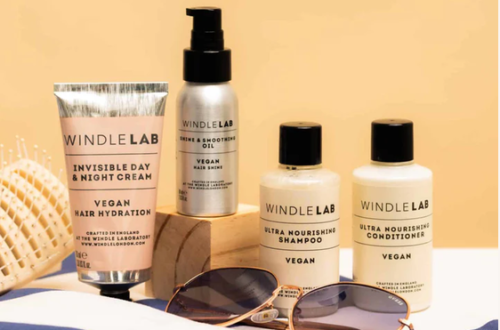
The connection between professional services and home care has become increasingly important as clients seek results that last between appointments. For more information about one salon’s approach to combining professional hairdressing with haircare, you can explore the Windle London website.
There is also an emotional aspect to a haircut aging well.
A successful haircut does not constantly demand attention.
It becomes part of the person.
After a few weeks, they stop thinking about the technical details and simply know how their hair behaves.
They learn where to part it.
How much product to use.
How it responds to air drying.
Which sections need a little extra attention.
The haircut becomes familiar.
This is one of the reasons people can become loyal to a particular stylist for years.
The stylist understands not only how their hair looks immediately after cutting but how it behaves throughout its life cycle.
Over time, that knowledge becomes extremely valuable.
A new stylist may create a technically impressive haircut.
A trusted stylist knows the history.
They know what happened the last time the hair was grown longer.
They remember which colour worked particularly well.
They know how the client reacts when their fringe becomes slightly too short.
That accumulated knowledge makes future decisions more precise.
Perhaps the best compliment a haircut can receive is not that it looked spectacular when it was finished.
It is that the client still liked it weeks later.
A haircut that ages well does not fight time.
It works with it.
It accepts growth, movement and change as part of the design.
That is why the best haircuts can sometimes appear almost ordinary at first glance.
They do not rely on dramatic angles or complicated styling.
Their quality reveals itself gradually.
The shape remains balanced.
The hair remains manageable.
The style continues to feel like the person wearing it.
And when the next appointment finally arrives, the haircut does not need to be rescued.
It simply needs to be refreshed.
That may be the quietest definition of excellent hairdressing.
Not creating something that looks perfect for one afternoon, but creating something that continues to make sense long after the salon mirror has been left behind.