There is a quiet shift happening in the way people understand haircare. Shampoo and conditioner, once seen as simple, routine products, are now being reconsidered as foundational elements of hair health. No longer just about cleansing and softening, they are increasingly recognised as the starting point of everything that follows—cut, colour, styling, and long-term condition.
In London, where hair is constantly exposed to environmental stressors such as pollution, hard water, and changing weather patterns, this shift feels particularly relevant. The question is no longer whether you are washing your hair, but how you are doing it, what you are using, and how those choices influence the integrity of your hair over time.
The Role of Shampoo: More Than Just Cleansing
Understanding What Needs to Be Removed
Hair accumulates more than visible dirt. Invisible layers of pollution, styling residue, natural oils, and minerals from water build up gradually, often without immediate signs. Over time, this accumulation can dull the hair, reduce movement, and interfere with how products perform.
A well-formulated shampoo does not strip the hair aggressively; instead, it targets what needs to be removed while preserving what the hair naturally requires. This balance is essential. When cleansing becomes too harsh, the scalp may overcompensate by producing more oil, while the lengths become increasingly fragile.
In London’s urban environment, this balance becomes even more important. The aim is not to achieve a squeaky-clean sensation, but to restore a sense of lightness and clarity to the hair without disrupting its natural equilibrium.
The Scalp as the Starting Point
Shampoo is often applied to the lengths of the hair, but its primary function is to care for the scalp. A healthy scalp creates the conditions for stronger, more resilient hair growth. When the scalp is overloaded or imbalanced, it can affect everything from texture to manageability.
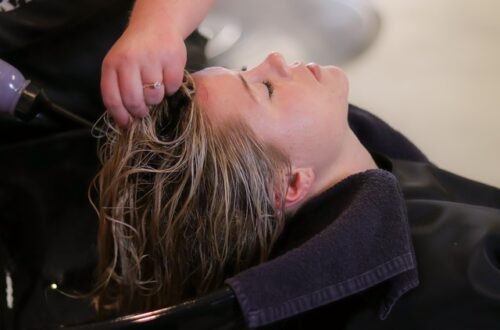
Modern approaches to shampooing focus on gentle massage, allowing the product to lift impurities without friction. This method respects the scalp’s sensitivity while ensuring that cleansing is effective. Over time, this approach contributes to hair that feels more consistent, both in appearance and behaviour.
Conditioner: The Architecture of Softness and Strength
Why Conditioning Is Structural, Not Cosmetic
Conditioner is often misunderstood as a purely aesthetic step, something that makes hair feel softer or easier to manage. In reality, it plays a structural role. After cleansing, the hair’s cuticle can become slightly raised, making it more vulnerable to damage and moisture loss.
Conditioner works by smoothing the cuticle, sealing in hydration, and reinforcing the hair fibre. This creates a surface that reflects light more evenly, giving the hair a fuller, healthier appearance. More importantly, it reduces friction, which is one of the leading causes of breakage.
The Importance of Application Technique
How conditioner is applied can be just as important as the product itself. Concentrating it on the mid-lengths and ends ensures that the areas most prone to dryness receive the most attention. Allowing it to sit briefly before rinsing gives it time to interact with the hair structure, enhancing its effectiveness.
In many cases, people rush this step, treating it as an afterthought. Yet it is here that much of the transformation happens, where the hair regains its ability to move fluidly and resist daily stress.
The Relationship Between Shampoo and Conditioner
A System Rather Than Separate Steps
Shampoo and conditioner are often chosen independently, but they are most effective when considered as part of a system. Each product prepares the hair for the next stage, creating a continuity that supports overall health.
When these products are aligned in formulation and purpose, they work together to maintain balance. The shampoo cleanses without over-stripping, while the conditioner restores without weighing the hair down. This harmony is what allows hair to feel both light and substantial at the same time.
Avoiding Overcorrection
One of the most common challenges in haircare is overcorrection. Using a very strong shampoo followed by an overly rich conditioner can create a cycle where the hair never quite settles into balance. It may feel clean initially but quickly becomes heavy or dry.
A more measured approach—using products that complement rather than counteract each other—leads to more stable results. This is particularly important in climates like London’s, where external conditions are constantly shifting.
Environmental Influence on Haircare in London
Pollution and Residue
City living introduces a layer of complexity to haircare. Airborne particles can adhere to the hair, creating a film that is not easily removed with water alone. Over time, this can affect shine, texture, and even colour longevity.
Shampoos designed with this in mind focus on thorough yet gentle cleansing, ensuring that buildup is removed without compromising the hair’s natural oils. This allows the hair to maintain clarity without becoming stripped.
Hard Water and Its Effects
London’s water is known for its mineral content, which can leave deposits on the hair over time. These deposits can make hair feel rough, reduce the effectiveness of conditioners, and contribute to a lack of shine.
A considered hair shampoo and conditioner routine can help counteract these effects, restoring softness and improving manageability. The key is consistency, allowing the hair to gradually return to a more balanced state.
The Subtle Art of Product Selection
Matching Products to Hair Behaviour
Rather than focusing solely on hair type, it is often more useful to consider how hair behaves. Does it become oily quickly? Does it feel dry at the ends? Does it struggle to hold style? These observations can guide product selection more effectively than broad categories.
Shampoos and conditioners that respond to these behaviours create a more personalised approach, allowing the hair to evolve over time rather than being confined to a fixed routine.
The Value of Professional Formulation
Products developed with a deep understanding of hair structure tend to deliver more consistent results. They are designed not just to create immediate effects but to support the hair over repeated use, building resilience and improving texture gradually.
Windle London’s approach to haircare reflects this philosophy, with formulations that prioritise balance, performance, and long-term health. Their shampoos and conditioners are designed to work in harmony with the hair, enhancing its natural qualities rather than masking them.
A Reflective Approach to Haircare
Learning Through Experience
Haircare is often a process of refinement. What works at one stage may need adjustment as the hair changes in response to environment, lifestyle, or even season. Paying attention to these shifts allows for a more intuitive approach, where products are chosen with intention rather than habit.
Over time, this awareness leads to routines that feel less like maintenance and more like care, where each step contributes to the overall wellbeing of the hair.
The Influence of Expertise
There comes a point where personal observation intersects with professional insight. Conversations around haircare often deepen when guided by those who understand its complexities, from formulation to technique.
In London, where the standard of hairdressing is notably high, these conversations are part of a broader culture of care. It is within this context that references to best hair stylists in London arise naturally, not as a search for quick fixes, but as an acknowledgment of the expertise that shapes how hair is understood and cared for.
Conclusion: Returning to the Essentials
Shampoo and conditioner may seem like the simplest elements of a haircare routine, but they are also the most influential. They set the tone for everything that follows, determining how the hair responds to styling, how it holds shape, and how it ages over time.
When chosen thoughtfully and used with care, they become more than routine—they become a foundation. In a city like London, where hair is constantly interacting with its environment, this foundation is essential. It allows the hair to remain balanced, resilient, and expressive, reflecting not just how it is styled, but how it is truly cared for.