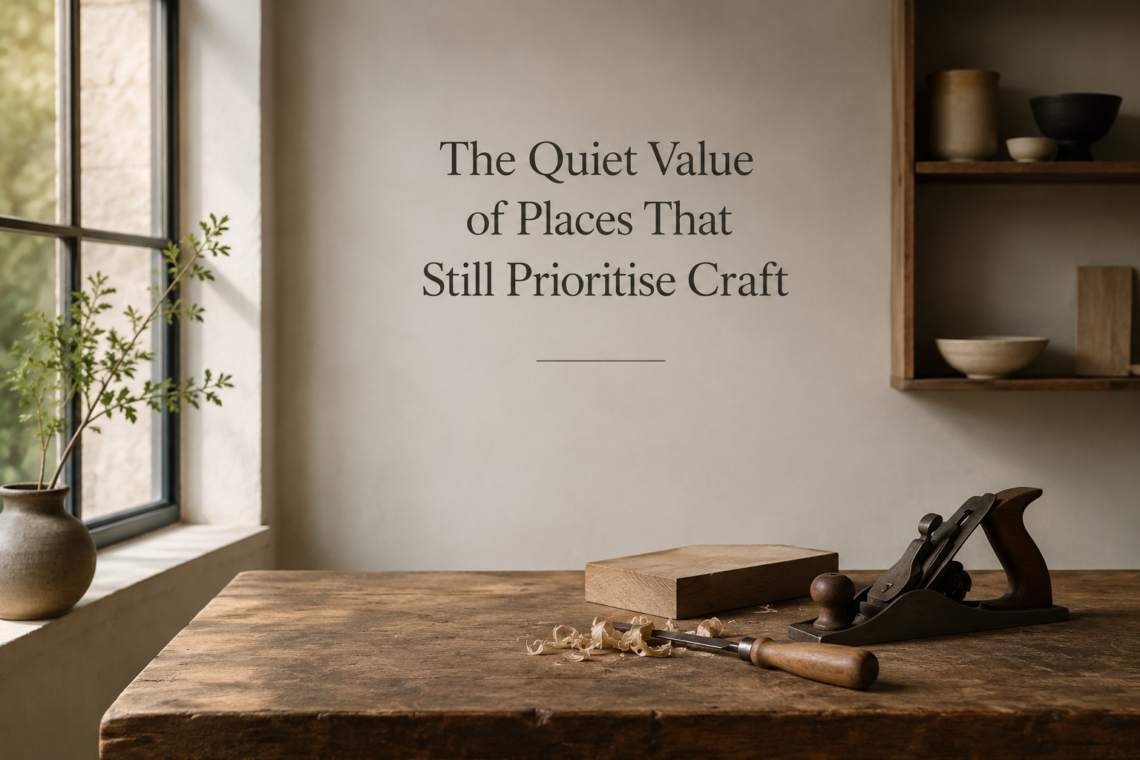
There is an interesting paradox in modern life.
Technology has made many things faster, more accessible, and more convenient than ever before. We can order products in seconds, communicate instantly across continents, and access information that previous generations could only have imagined. Convenience has become one of the defining characteristics of the modern world.
Yet at the same time, there appears to be a growing appreciation for things that cannot be rushed.
Across multiple industries, people are increasingly drawn to craftsmanship, expertise, and experiences built around attention to detail rather than speed. Whether it is artisan food, bespoke tailoring, independent bookshops, or specialist hospitality, there is renewed interest in places where quality remains the priority.
The world of hairdressing offers a particularly interesting example of this shift.
While trends, technology, and products continue to evolve, some of the most respected salons continue to build their reputation on something remarkably traditional: craft.
The Difference Between a Service and a Craft
The words “service” and “craft” are often used interchangeably, but they are not quite the same thing.
A service focuses on completing a task.
A craft focuses on mastering it.
The distinction may seem subtle, yet it has a profound impact on how people experience a profession.
Craft requires patience.
It requires repetition.
It requires the willingness to continually refine skills long after competence has been achieved.
In many creative professions, the most accomplished practitioners are often those who never stop learning. They remain curious about technique, open to new ideas, and committed to improving the quality of their work.
Hairdressing is no exception.
Behind every apparently effortless result lies a combination of technical understanding, observation, experience, and judgement that has often taken years to develop.
Why Detail Matters
One of the defining characteristics of craftsmanship is attention to detail.
Interestingly, the details that matter most are often the ones clients never consciously notice.
A slight adjustment in balance.
A subtle change in shape.
The way movement is created within a haircut.
The way colour is blended to appear natural rather than obvious.
These decisions are rarely dramatic. They do not usually attract attention on social media or create headline-grabbing transformations.
Yet they frequently determine whether a style continues to work weeks later.
The most successful outcomes are often built from dozens of small decisions rather than a single dramatic one.
This is one reason craftsmanship tends to age well. Its value becomes increasingly apparent over time.
The Return of Thoughtful Consumption
Another reason craftsmanship has regained relevance is the changing way many people approach consumption.
For years, novelty often dominated decision-making. The newest trend, the newest product, or the newest experience frequently attracted the most attention.
Today, however, many consumers appear more interested in longevity.
They are asking different questions.
Will this last?
Is it well made?
Does it genuinely suit my needs?
Is there expertise behind it?
These questions can be applied to almost anything, from furniture and clothing to hospitality and personal care.
Within hairdressing, this shift has encouraged a greater appreciation for professionals who prioritise thoughtful decision-making over quick fixes.
Clients increasingly value recommendations that consider long-term outcomes rather than immediate impact alone.
The Human Side of Expertise
One of the most misunderstood aspects of craftsmanship is that it is not solely technical.
Technical skill is essential, but human understanding often plays an equally important role.
A skilled craftsperson must understand materials.
A skilled hairdresser must understand people.
Every individual brings different expectations, preferences, lifestyles, and concerns.
The ability to listen carefully and interpret those factors is often what separates a good result from a truly successful one.
This is particularly important because hair occupies a unique position within personal identity.
People may change clothing daily, but hair remains a constant part of how they present themselves to the world.
As a result, decisions surrounding it often carry more emotional significance than many realise.
Why Reputation Still Matters
In an age dominated by algorithms, ratings, and online visibility, reputation continues to hold remarkable power.
Not because reputation replaces quality, but because it is usually built upon it.
The strongest reputations tend to develop gradually.
They are earned through consistency rather than publicity.
Through years of delivering reliable results.
Through recommendations shared between friends, colleagues, and family members.
This type of reputation often feels different from popularity.
Popularity can arrive quickly.
Reputation usually takes much longer.
The distinction matters because trust remains one of the most valuable currencies within any profession.
People are naturally drawn towards individuals and businesses that have demonstrated reliability over time.
The Importance of Environment
Craftsmanship is also influenced by environment.
Creative work rarely exists in isolation.
The spaces people work within often shape the quality of the experience they create.
Some environments encourage speed and efficiency.
Others encourage observation, attention, and reflection.
The most memorable professional experiences often take place in environments that allow expertise to flourish rather than rush.
This is one reason certain neighbourhoods become associated with particular industries.
Creative communities tend to attract other creative professionals.
Ideas are exchanged.
Standards evolve.
Reputations develop.
Over time, entire areas can become known for a particular quality of work.
Why Craft Endures
Trends inevitably change.
Techniques evolve.
Consumer expectations shift.
Yet craftsmanship remains surprisingly resilient.
The reason is simple.
While trends influence what people want, craftsmanship influences how well those desires are delivered.
One addresses fashion.
The other addresses execution.
Both matter, but they serve different purposes.
As a result, the most respected professionals are often those who can embrace innovation without abandoning fundamentals.
They understand that trends may attract attention, but quality is what sustains trust.
Looking Beyond Trends
In conversations about beauty and personal style, attention often focuses on what is new.
New colours.
New techniques.
New influences.
Yet many of the qualities people value most remain remarkably consistent.
Skill.
Attention to detail.
Thoughtful judgement.
Professional integrity.
These attributes rarely dominate headlines, but they often define memorable experiences.
Even discussions about what might constitute the best hair salon London clients recommend frequently revolve around these qualities rather than trends alone. People tend to remember places where expertise feels genuine, where standards remain high, and where the experience reflects a clear commitment to craft.
Perhaps that is why craftsmanship continues to resonate despite living in an increasingly fast-paced world.
It offers something that technology, convenience, and trends cannot easily replicate.
The reassurance that someone has dedicated themselves to doing something exceptionally well. And in a culture that often rewards speed, there is something quietly powerful about that commitment to quality.